Мусорная корзина Finder представляет собой смесь нескольких различных каталогов:
~/.Trash//.Trashes/<uid>/на каждом томе (включая загрузочный том)
например,/Volumes/Big Media Volume/.Trashes/501/
Большинство операций по удалению корзины перемещают удаляемый элемент в каталог под вашим домашним каталогом. Однако, если вы удалите что-то на отдельном томе, Finder переместит элемент в каталог /.Trashes/<uid>/ этого тома (потому что перемещение файла в место на том же томе происходит очень быстро, а копирование файла с другого тома в каталог корзины вашего домашнего каталога может быть довольно медленным).
Попробуйте проверить основной каталог корзины (в окне Terminal):
Это создаст для вас новый каталог ~/.Trash'. Вы можете исследовать содержимое файла/каталога.Trash.old`, чтобы попытаться определить его происхождение.
Если проблема связана с каталогом корзины на каждом томе, вы можете использовать ту же идею: переместите его в сторону, извлеките его, затем перемонтируйте его (отключите и снова подключите внешний диск, откройте образ диска, используйте Disk Utility для перемонтирования внутреннего тома):
If you are encountering the error code 1407 on your Mac during any of the file transfer or trying to delete your files, this could be due to problems with the disk or storage drives. The article provides you a few tested and tried troubleshooting methods to fix the error code 1407 on your Mac system.

The Mac Error 1407 is encountered when you try to copy, deleted or transfer files to any external drives like HDD, SSD, USB flash drives or SD card. The error shows up stating:
The operation can’t be completed because an unexpected error occurred. (Error Code -1407).
Reasons for Error code 1407 on Mac
- When Hard disk fails to execute read/write permissions: As HDD always use a mechanical means to read or write data to the disk, any damage caused to these parts eventually lead to the disk failure of the storage device.
- Unsupported drive volume formats: When File is been transferred to other storage device, the formats should be synchronized with both the devices.
- When file is locked by the system: When file is locked by the system, you will not be able to transfer, copy or delete the file from the system. Trying to do so, will lead to Mac error code 1047.
- If the file is being used by another program: When a file is open or used by another program, you will be unable to move the files to other devices. This works similar in Windows as well.
Now, to transfer your files or to delete the files from your Mac all you need to do is resolve the error 1407. Here are the tried methods to fix the Mac 1407 error and help you transfer your files.
How to Resolve the Mac Error Code 1407?
1: Fix the Error 1407 by Repair all Disk Permissions
- FinderHard Disk Drive(Click here if Finder is not responding on your macOS)
- Click on the Get Info icon. Now you see the Macintosh HD window on the screen.
- When you see the hard drives list, Select the hard disk type and click the on Repair Disk Permissions
2: Format the Drive with another drive format to fix the error
- Disk Utility program
- Now, Select the Eraser tab from the various tabs present on it. You can see the options of drives to your left hand side. Select the drive
- You will be given an option to delete the drive with a different drive/ volume format. Make sure you specify a proper name for the drive.
- Lastly, click the erase
Although the above mentioned method erases all the data from the drive, formatting is one of the most used methods to fix any errors on the hard drives. Data once formatted cannot be retrieved back unless an effective recovery method is used to recover data from the Mac
If you have lost any data from the Mac hard disk, SFWare Mac data recovery tool helps you recover data from the formatted drive in just a few minutes. The software supports all the Mac versions including the macOS Big Sur, Catalina, Mojave, high sierra and others.

3: Force Quit the Finder
If your files are used by Finder Force Quitting Finder helps you fix the issue
- Click on the AppleCommand + Options + Esc icon at the same time
- Now window with the Force quit option appears
- FinderForce Quit
- Now, click the Relaunch
4: Use the Terminal
Terminal is a command line interface comes built-in with Mac OS. Terminal helps you fix errors on the drive using the appropriate command. Using terminal commands you can try recovering hidden files from Mac
- Now, type the command sudo chflags –R nouchg. This is the command to unlock “locked” files on Mac OS.
- Next, press the return icon. Enter the password when prompted to do so and click the Return
5: Remove the Apple Finder PList
PList is an extension used to save the preference of application. These are files in XML format and hold the properties and configuration setting for various programs. Removing the finder plist from the system helps to fix the error 1407.
- Finder first. Hold down the Options key and navigate to the Go button
- Click on the LibraryPreferences
- Remove the file written as: apple.finder.plist
- Logout and re-login
With the help of above mentioned methods you can easily resolve the Mac error code 1407.
Four Tested Solutions to Troubleshoot Mac Error Code 1407
If you encounter The operation can’t be completed because an unexpected error occurred. (Error Code -1407), this post will offer five working solutions to fix the Mac error code 1407.

The operation can’t be completed because an unexpected error occurred. (Error Code -1407). Does this Mac error message look familiar to you? This error shows up when you try to send files to the Trash or transfer data to your external storage devices, say, HDD, SSD, USB thumb drive, or SD card.
What is Mac error code 1407 and how to fix it? This post will give an overview of it and show you four working solutions to troubleshoot this Mac error code with step-by-step guides. Let’s move forward.
Table of Contents:
Overview of Mac error code 1407
- You don’t have read/write permissions to the file. If you are not the administrator, chances are you have limited read-write access to certain files.
- Your macOS system locks the file. You’ll find unable to move, copy, or remove a file from the system if it’s locked. Mac error code 1047 will appear if you attempt to do so.
- The file is being used by another program. For example, you won’t be able to delete a Word document if it’s still running behind. Or, Finder is using the file you want to delete or transfer.
- Abrupt termination that results in a damaged file. When the Mac shuts down while you are working on the file, possibly, the file will get damaged and can’t be deleted or transferred.
- The file format is not supported by your connecting device. When you transfer files from your Mac to another storage device, check the file system compatibility.
Check and change the permission
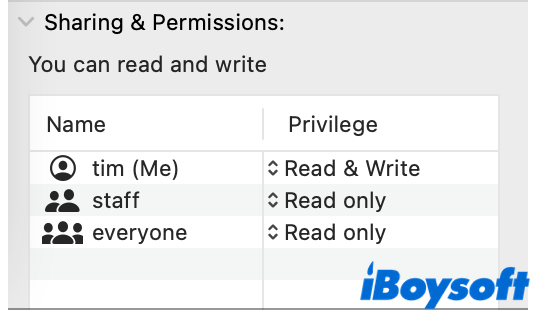
The file permission determines who can read and write files on your Mac computer. You can change permission settings for a file, folder, or disk in the Finder. Hopefully, the Mac error code 1407 will disappear when you have the correct permissions.
Step 1. Right-click on the file > Get Info.
Step 2. Scroll down to Sharing & Permissions section.
Unlock the file from the system
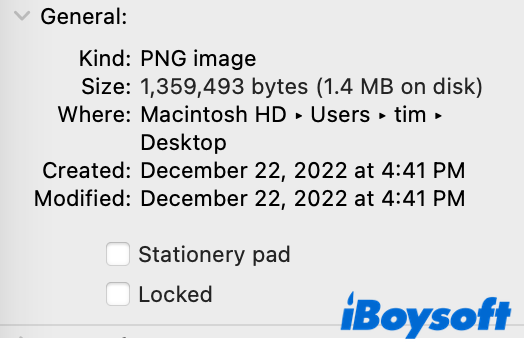
Step 1. Similarly, right-click on the item and choose Get Info.
Step 2. Under General, check if the box in front of Locked is ticked or not. If the file is locked, uncheck the box to set it free.
Alternatively, you can run sudo commands in Terminal to unlock a file. Here’s how:
Step 1. Bring out Terminal from Finder > Applications > Utilities.
sudo chflags – R nouchg P#
P# should be changed to the path of the file you want to unlock. To add the path automatically, drag and drop the file to the command line.
Step 3. You’ll be asked to enter the password. Enter it to confirm the change.
Quit Finder by force
If your file is being occupied by Finder or any other programs, you can force quit apps to fix the Mac error code 1407.
Step 1. Click on the Apple menu in the top-left corner of your screen and a context menu list should appear.
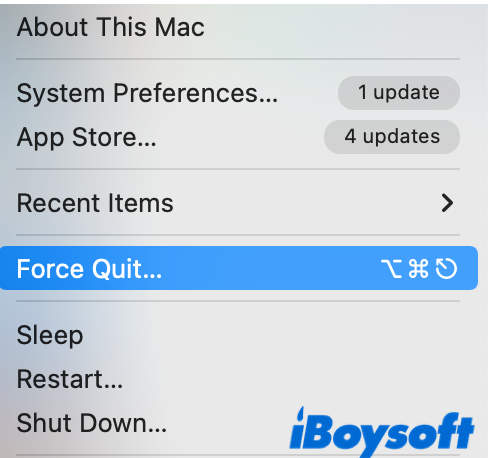
Step 2. Click the Force Quit option and all running applications will show up in the list. Select Finder and click on the Relaunch button.
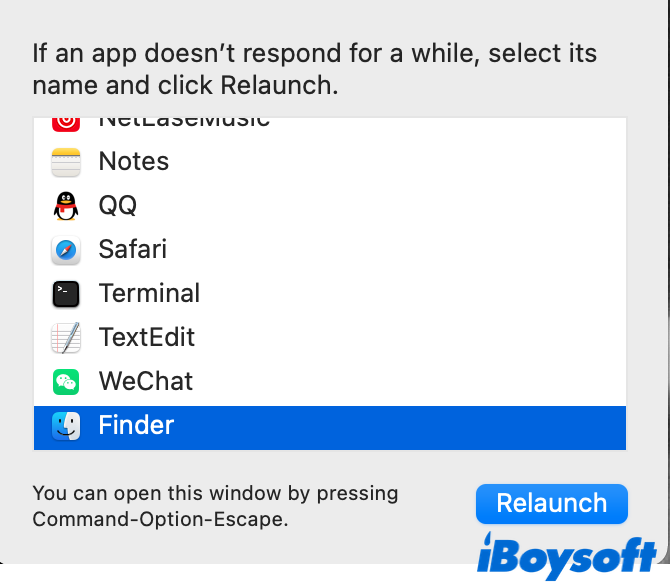
If you know the exact program that’s keeping your file up, click on it and choose Force Quit. Then you should be able to delete and transfer the file without any hassle.
Format the drive with an Apple supported file system
As mentioned above, you can’t transfer data to external storage media that’s not holding a compatible file system with the macOS. One example is that NTFS drives are read-only on Mac. Lucky you, you can format the drive into a macOS-compatible one to fix the Mac error code 1407.
One thing you need to know is that formatting will erase everything on your drive. Therefore, before formatting, you should either prepare a full copy of your data or recover data from the drive first.
iBoysoft Data Recovery for Mac is versatile Mac data recovery software that fully meets your data recovery needs in all cases. It is possible to successfully restore all deleted and lost data from portable HDDs, SSDs, SD cards, USB drives, and other storage on your Mac. It can also recover data from corrupted external hard drives or formatted ones.
To use iBoysoft Data Recovery for Mac:
Step 1. Download & install iBoysoft Data Recovery for Mac.
Download iBoysoft Data Recovery for Mac for free and finish installation within a few clicks. Remember to enable Full Disk Access and allow system extensions during the initial installation. Then launch it in Finder > Applications.
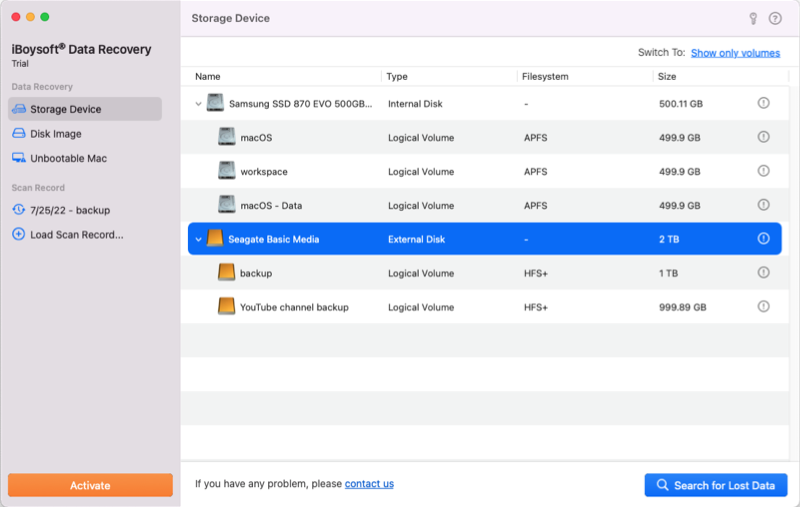
Step 2. Choose and scan your external drive.
Under the Data Recovery column, choose Storage Device to find your external disk, then click Search for Lost Data to begin the scan process.
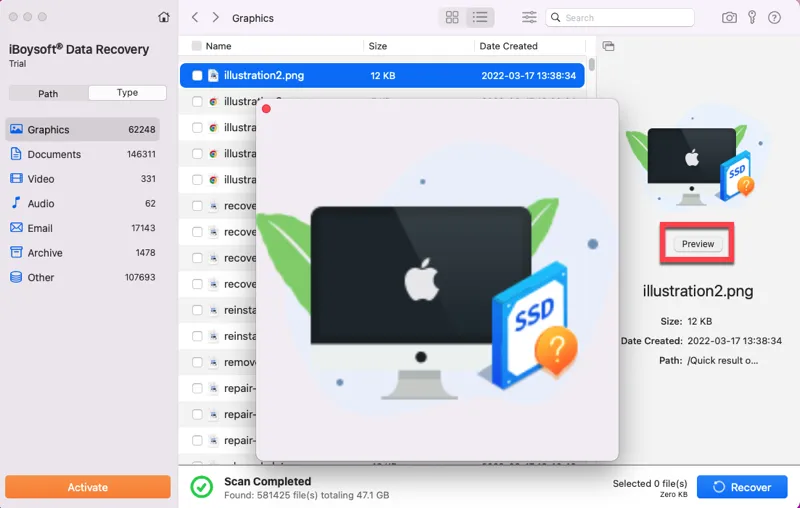
Step 3. Preview and recover data.
Filter files using path and type, then preview the files that can be recovered. Click the Recover button after selecting the desired files. The restored files should be saved in a different location.
Once you’ve recovered important files from the incompatible drive, you can check the article below for a detailed guide on how to format a drive on Mac.
How to Format an External Hard Drive on Mac?
Conclusion
FAQs about Mac error code 1407
You can fix error code 1407 on Mac by changing file permissions, unlocking the file, force-quitting Finder, or formatting the external storage media. Then you should be able to move the item to Trash and drag-drop files to external hard drives.
If an item is locked by the system, you have to unlock it first before moving it to Trash. First, right-click on the object, then click File > Get Info (or press Command + I), and then uncheck the Locked checkbox to unlock it.
“The operation can’t be completed because an unexpected error occurred. (Error Code -1407).”
इस पोस्ट को हिंदी में पढ़ने के लिए यहां क्लिक करें
This blog lists the reasons behind the error code 1407 and some effective solutions to resolve it.

Reasons behind Apple Error Code 1407
Below we have mentioned some common reasons that may result in the error code 1407 on Mac:
- Hard disk fails to execute read/write permissions
- Unsupported drive volume formats
- The file is locked
- The file is being used by another program
Also Read: Why is Safari not Working after Update?
Methods to Fix Mac Error Code 1407
Method 1: Force Quit the Finder
- Simultaneously press the Option + Command + Esc keys to open the Force Quit window.
- Select Finder from the available options and then click on Force Quit, followed by Relaunch.
- Lastly, try to delete or move your file.
Method 2: Unlock the File
- Select the file you want to delete or move. Then, go to File menu and select Get Info.
- Make sure to unmark the locked checkbox to unlock the file.
Follow the below-given steps to unlock the file using Terminal:
- Go to Applications, followed by Utilities and Terminal to launch the Terminal option.
- Type sudo chflags – R nouchg P# in the Terminal window and then click on Return.
Here, you have to replace P# with the path of the file or folder you want to unlock.
- When prompted, enter the password. It will unlock the locked file or folder.
Method 3: Use Disk Utility
- Start or restart your Mac that throws the error code 1407.
- Then, press and hold the Command + R keys until Apple logo appears. This boots your Mac into macOS Recovery Mode.
- Further, select Disk Utility from the macOS Utilities window and then click on Continue to launch Disk Utility.
- Then, select the startup disk from the sidebar and then click on First Aid.
- Click on Run to begin the Mac startup disk repair process and wait until the repair process completes.
Method 4: Reinstall macOS
Try to reinstall macOS if the Disk Utility repair method fails. Here’re the steps to reinstall macOS:
Note: Make sure to back up your startup disk using Time Machine or save your files to an external hard drive before reinstalling macOS as it erases your Mac storage drive.
- Start or restart your Mac.
- Then press and hold the Command + R keys and release them when the Apple logo appears.
- Mac boots into macOS Recovery Mode.
- Select Reinstall macOS from the macOS Utilities window and then click Continue.
- When prompted, erase the Mac storage drive and follow the on-screen instructions.
- Once you have reinstalled macOS, restore the backed-up files to your Mac storage drive.
Also Read: How to Recover Data after macOS update?
Use Free Mac File Recovery Software
If you end up losing your crucial data while resolving the error 1407, use a Mac data recovery software, such as Stellar Data Recovery for Mac to recover your lost or deleted data. It is a DIY software that effectively recovers data after emptying Trash, crashed Mac, drive corruption, and macOS upgrade. It allows recovery of deleted documents, photos, and audio files with ease. The software helps regain data lost due to any logical data loss situation and is 100% accurate and efficient in recovering data. The software is compatible with macOS Ventura 13.0 and lower versions.
Note: Stellar also provide free Mac data recovery software. It offers free scan, free preview, and up to 1 GB of free data recovery to help you determine its effectiveness. However, to recover unlimited data, you can upgrade to the Standard, Professional, Premium, or Technician edition of the software. Also, all the editions of Stellar Data Recovery for Mac software come with a 30-day money-back guarantee.